What is slow travel? A beginner's guide

Slow travel is easy to describe: you take the slow way, you don't rush, and getting there is part of the trip rather than the bit you put up with. You spend longer in fewer places, and you see the country between them. Lucy and I first did it properly in 2017, with three months of cycling and wild camping through France and Spain to Gibraltar, by way of the foothills of the Pyrenees and the villages of the Valencian mountains.
This guide covers what slow travel involves and how to keep a record of a slow trip as you go.
What slow travel means
You put the journey ahead of the destination. In practice that means going over land or water, at a pace where you can stop when something catches your eye. A train instead of a flight. A week in one town instead of three cities in three days.
There aren't any rules. Some people go by bike or on foot, some by boat or van, and some just stay longer in each place.
Why people choose it
You see the country in between
On a plane you see an airport at each end. Overland, the country changes slowly outside the window or under your wheels, and the bits in between are often what you remember most.
Less flying
Trains, buses, bikes, boats and your own feet produce far less carbon than flying, so a slow trip usually leaves a smaller footprint.
You notice more
At a slower pace you pick up on things you'd miss at speed, like the way the houses change as you cross a region, or the shop where everyone stops for a chat. You spend more time where people live their ordinary lives, and conversations happen that never would through a coach window.
No timetable
There's no clock to beat, which leaves room for things you didn't plan, like getting lost in a side street or finding a viewpoint that isn't in any guidebook.
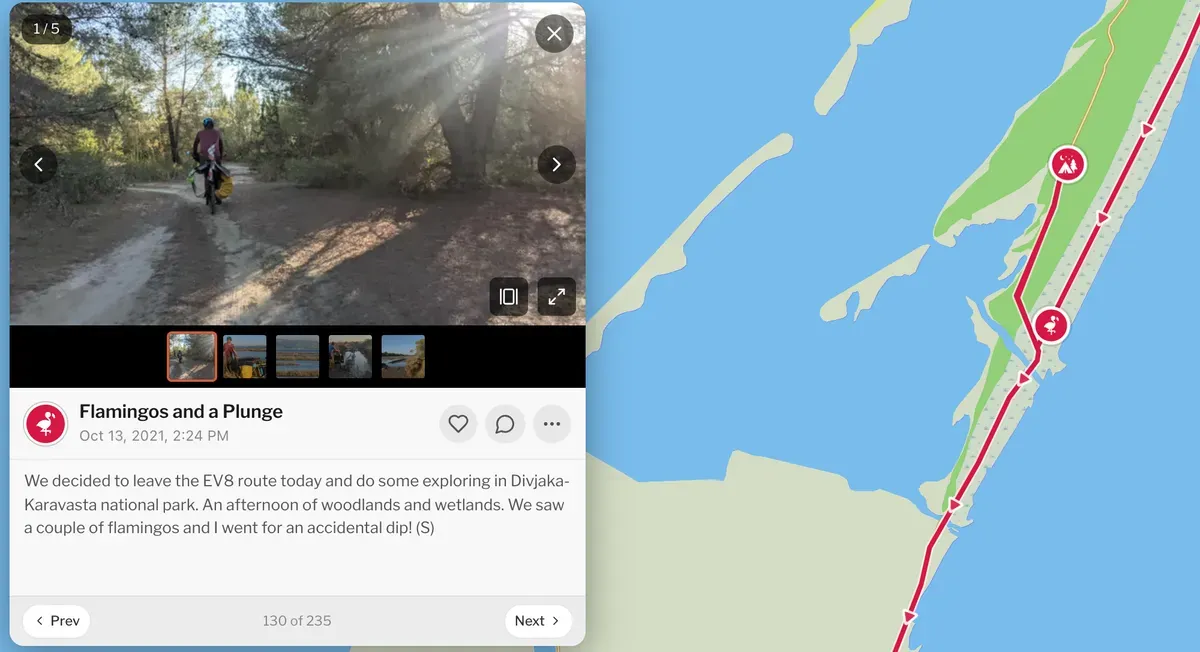
Keeping a record of a slow trip
Slow trips tend to be long, and long trips blur together. I built Pebbls for trips like these.
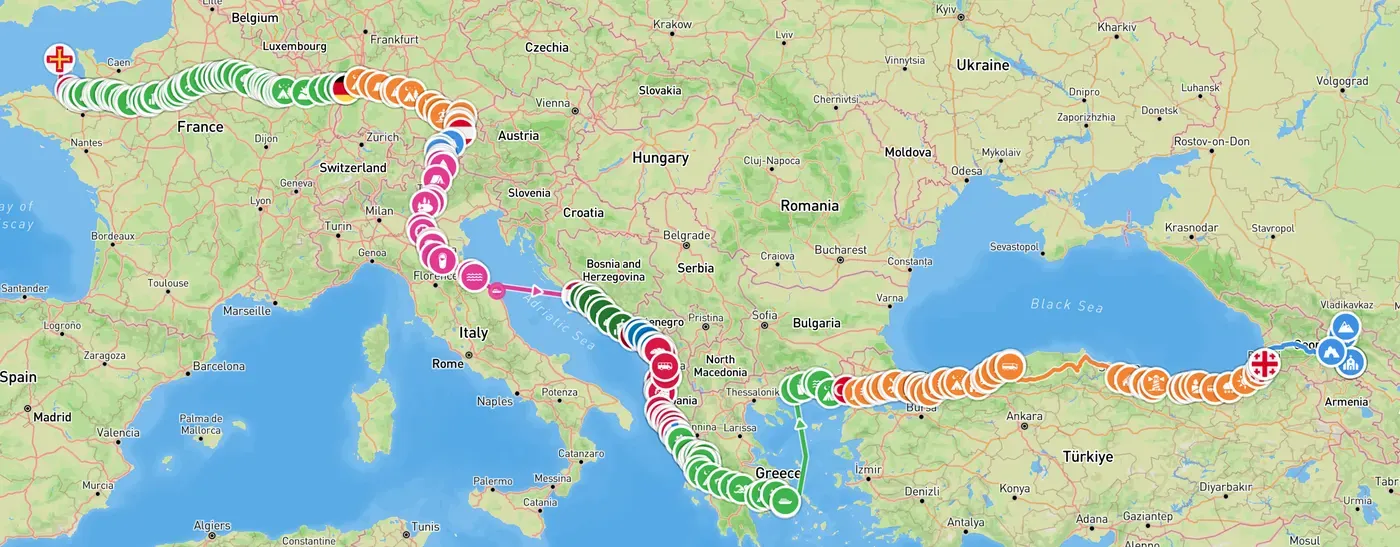
- Track the route. Tap TRACK and the app records where you go in the background, on foot, by bike, by boat or by van. It works without signal and uploads when you're back in range.
- Drop pebbls. A pebbl is a photo, a note or both, pinned to the map where it happened.
- Share the link. Family and friends follow the journey in a browser, with no app, and get a message when you post. The map updates a few times an hour. With Explorer, it keeps up with you as you move.
- Watch it back. Most chapters get a flyby film, made for you and free: a 3D film along your route with your photos where you took them.
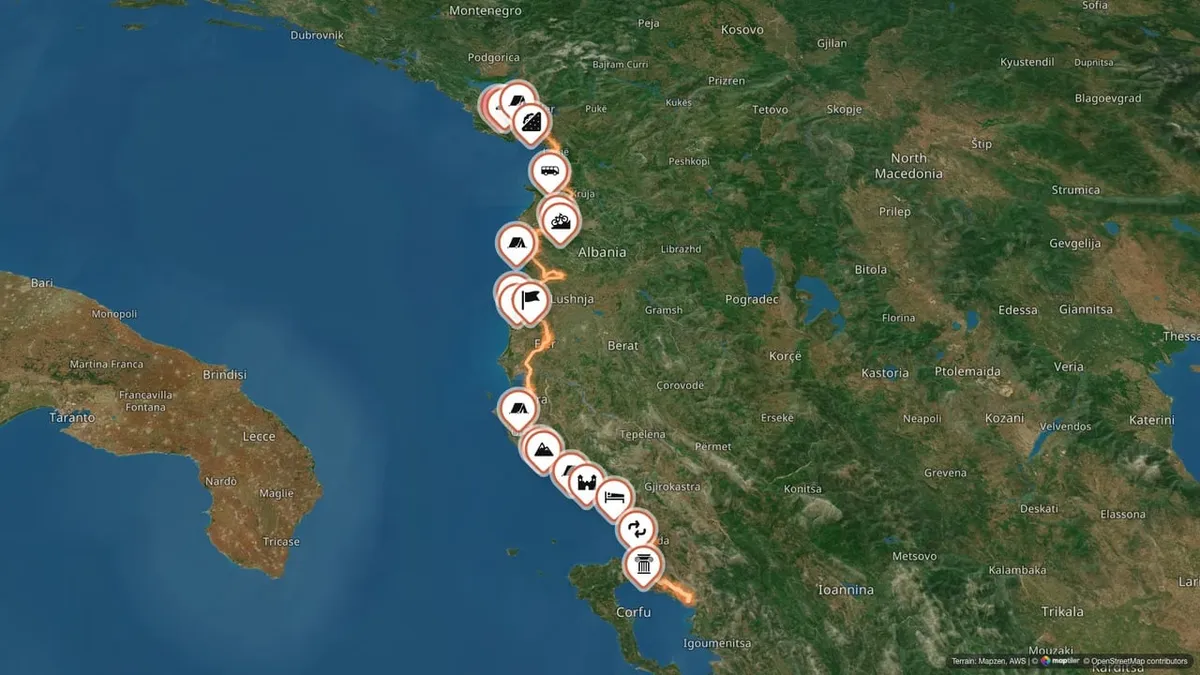
All of that is free apart from faster map updates, which come with an Explorer membership. Get Pebbls and start a journey before you leave.